

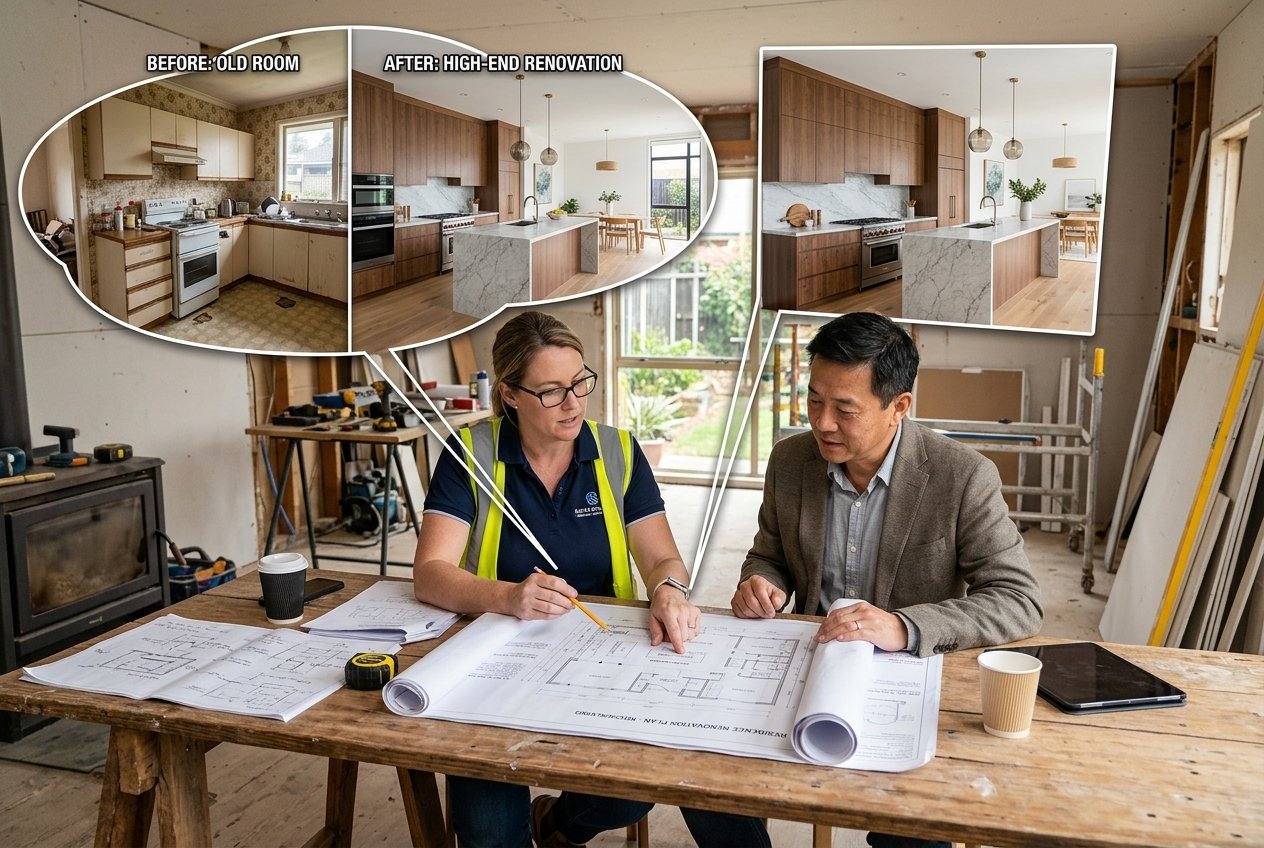
Luxury isn’t always about spending more.
Moreover, it’s about getting the details right.
This includes custom luxury renovations in hamilton ontario.
You can spend a significant amount of money on a renovation and still have the finished space feel ordinary.
On the other hand, you can walk into a thoughtfully renovated home and immediately feel that it’s high-end—even if you can’t identify one particularly expensive feature.
Why?
Because a truly high-end renovation isn’t defined by the price of the countertop, the brand of the appliances, or how much was spent on tile.
It’s defined by how well everything comes together.
The proportions and lighting reflect thoughtful design. The transitions and alignment showcase craftsmanship. Thus, these elements demonstrate custom luxury renovations in hamilton ontario.
These seemingly small details are often what separate a good renovation from an exceptional one.
High-End Doesn’t Have to Mean Expensive
When homeowners hear the words luxury renovation, it’s easy to picture marble countertops, imported tile, designer fixtures, and expensive appliances.
Those materials can certainly be beautiful.
But expensive materials alone don’t create a high-end home.
Put a beautiful countertop beside poorly aligned cabinetry and you’ll notice the cabinetry.
Install expensive tile with awkward cuts and you’ll notice the cuts.
Hang a designer pendant light in the wrong location and the entire room can feel slightly off.
High-end design is less about the individual price tags and more about planning, proportion, consistency, and execution.
Sometimes the difference between ordinary and exceptional costs very little.
It simply requires more thought.
1. Everything Feels Intentional
One of the easiest ways to recognize a professionally designed renovation is that very little appears accidental.
Cabinets align.
Lighting is centred.
Tile patterns terminate intentionally.
Doors and openings feel properly proportioned.
Materials transition naturally from one room to another.
Nothing feels like it was added afterwards because someone suddenly realized it was needed.
That doesn’t happen by accident.
It happens when decisions are made before construction reaches that stage.
The earlier the details are considered, the cleaner the finished renovation usually feels.
2. Great Sightlines Change How a Home Feels
Stand at your front door and look through your house.
What do you see?
Now stand in your kitchen and look toward the living room.
Or walk down the main hallway.
These views are called sightlines, and they’re an important part of thoughtful home design.
A well-designed renovation considers what you’ll see from different areas of the home.
That might mean positioning an opening so your eye is drawn toward a fireplace.
It could mean removing a wall to create a visual connection between the kitchen and living area.
Or it may simply mean making sure cabinetry, doorways and architectural features align properly.
When sightlines are carefully considered, a home feels calmer, larger and more intentional.
3. Lighting Should Be Designed, Not Just Installed
Lighting is one of the most underestimated parts of a renovation.
A room can have beautiful finishes and still feel disappointing if the lighting isn’t right.
High-end renovations usually use several layers of light rather than relying on one source.
That may include:
- Recessed ceiling lighting
- Pendant lighting
- Under-cabinet lighting
- Wall sconces
- Decorative fixtures
- Natural light
- Accent lighting
Placement matters just as much as the fixtures themselves.
Pot lights should relate to the layout below them. Pendants should align properly with islands and tables. Vanity lighting should provide useful illumination rather than simply fill an empty wall.
Good lighting doesn’t just help you see the renovation.
It helps you experience it.
4. Consistency Creates a More Expensive Look
One of the simplest ways to make a home feel more refined is consistency.
That doesn’t mean every room needs to look identical.
It means the home should feel connected.
Door hardware shouldn’t randomly change from room to room.
Trim profiles should make sense together.
Flooring transitions should feel deliberate.
Fixtures and finishes should complement one another.
Even something as simple as maintaining consistent switch and outlet styles can contribute to the overall impression of the home.
Individually, these decisions may seem insignificant.
Together, they create cohesion.
And cohesion is one of the things people often interpret as quality.
5. Custom Millwork Can Transform Ordinary Spaces
One of the strongest ways to make a renovation feel custom is through thoughtful millwork.
Instead of adding furniture to solve every storage problem, cabinetry can become part of the architecture.
That could include:
- Built-in entertainment units
- Mudroom cabinetry
- Window benches
- Fireplace surrounds
- Home office cabinetry
- Pantry storage
- Floor-to-ceiling kitchen cabinetry
- Integrated shelving
Custom millwork can make awkward spaces useful while giving a room a finished, intentional appearance.
It doesn’t necessarily need to be elaborate.
Sometimes the simplest built-in is the feature that makes a room feel completely different.
6. Material Transitions Matter
There are places throughout a renovation where two materials have to meet.
Hardwood meets tile.
Countertop meets backsplash.
Drywall meets cabinetry.
Trim meets flooring.
Old construction meets new construction.
These transition points may occupy only a few millimetres of space, but they can have an enormous effect on the finished appearance.
When transitions are poorly planned, they attract attention.
When they’re executed properly, you barely notice them.
And that’s exactly the point.
Some of the best construction details are the ones you never consciously notice.
7. Tile Layout Should Be Planned Before Installation
Beautiful tile doesn’t automatically create a beautiful bathroom.
Layout matters.
Before installation begins, consideration should be given to where full tiles will land, where cuts will occur, how niches will align, and how the pattern interacts with fixtures and other architectural elements.
A few inches of adjustment can sometimes dramatically improve the finished appearance.
The goal is to avoid awkward slivers, unnecessary cuts, and layouts that appear unplanned.
This is another example where craftsmanship and preparation can matter more than the price of the material itself.
8. Proportion Is More Important Than Size
Bigger isn’t always better.
A huge kitchen island can look impressive in a showroom but become frustrating if it overwhelms the room.
Oversized fixtures can make ceilings feel lower.
Cabinetry that’s too small for the wall can make a kitchen feel unfinished.
Even door heights, trim sizes and fireplace dimensions influence how balanced a space feels.
High-end design considers the relationship between everything in the room.
The goal isn’t to make every feature bigger. It’s to make every feature feel like it belongs.
9. Hidden Functionality Is a Form of Luxury
Some of the best features in a renovation aren’t immediately visible.
A place for small appliances.
Charging drawers.
Pull-out garbage and recycling.
Hidden pantry storage.
Built-in organizers.
Properly planned electrical outlets.
Storage exactly where it’s needed.
These features reduce visual clutter while making everyday life easier.
And that’s an important distinction.
Luxury isn’t only about what guests notice when they walk into your home.
It’s also about what makes the home easier for you to live in every day.
10. The Final 5% Makes a Huge Difference
Near the end of a renovation, most of the major work has already been completed.
The walls are finished.
The flooring is installed.
The cabinetry is in.
The fixtures are connected.
But that final stage is incredibly important.
This stage corrects small imperfections, completes the trim, and makes final adjustments.
Touch-ups are completed, and numerous small details come together to finish the work.
Rushing through that final portion of a project can undermine months of good work.
A high-end renovation should feel finished when you walk through it.
Not almost finished.
Craftsmanship Is Something You Feel
Most homeowners aren’t going to walk into a renovated room and inspect every reveal, transition, grout line, or piece of trim.
But they don’t need to.
They’ll still notice the overall result.
When everything aligns properly and the details work together, a room simply feels different.
It feels calm.
Balanced.
Intentional.
Finished.
That’s craftsmanship.
And it’s one of the biggest differences between simply renovating a house and creating a home that feels truly custom.
Spend Smarter, Not Necessarily More
There will always be opportunities to spend more during a renovation.
More expensive countertops.
More expensive fixtures.
More expensive flooring.
But before increasing the material budget, it’s worth asking whether the money could create a greater impact somewhere else.
Sometimes better lighting design makes a bigger difference than upgrading the countertop.
Sometimes custom storage provides more value than an expensive decorative feature.
Sometimes improving the layout changes the entire house.
A good renovation budget isn’t simply about spending less or spending more.
It’s about spending intentionally.
The Elite Building & Construction Approach
At Elite Building & Construction, we believe the quality of a renovation is determined by more than the materials you can see.
It starts with understanding the existing home, planning the project properly, coordinating the different trades, and paying attention to the details throughout construction.
Whether we’re completing a kitchen renovation, bathroom renovation, basement, structural alteration, addition, or full-home transformation, the goal is the same:
Create a finished space that looks intentional, functions properly, and feels like it belongs in the home.
Because the difference between a renovation that looks good today and one you’ll appreciate for years often comes down to the details.
Final Thoughts
If you’re planning a renovation and want your home to feel high-end, don’t begin by asking:
“What’s the most expensive material I can afford?”
Instead, ask:
“How can all of these elements work together?”
A beautiful renovation is the result of hundreds of decisions.
When those decisions are thoughtfully planned and carefully executed, you don’t need excessive decoration or the most expensive materials in the showroom.
The home simply feels right.
And that may be the best definition of luxury there is.
Frequently Asked Questions
What makes a home renovation look expensive?
Thoughtful proportions, consistent finishes, quality craftsmanship, proper lighting, well-planned cabinetry and clean material transitions can all contribute to a high-end appearance. Expensive materials alone don’t guarantee a luxurious result.
Do I need luxury materials to create a high-end renovation?
No. Well-selected mid-range materials can look exceptional when they’re properly coordinated and professionally installed. Planning and workmanship often have a greater visual impact than simply choosing more expensive products.
What renovation details are worth paying attention to?
Lighting placement, cabinetry alignment, flooring transitions, trim work, tile layouts, hardware, storage and the relationship between architectural features are all important.
Does custom millwork make a renovation look more luxurious?
It can. Built-in cabinetry and storage can make a space feel more intentional while improving functionality. The design should complement the architecture of the home rather than simply adding decoration.
When should renovation details be planned?
As early as possible. Decisions involving electrical locations, lighting, cabinetry, tile layouts, plumbing fixtures and material transitions are much easier to coordinate before construction reaches those stages.
Can Elite Building & Construction help plan these details?
Yes. Elite Building & Construction works with homeowners throughout the renovation process to coordinate the construction, layout, materials and finishing details required to create a cohesive finished space.
Related Services
Planning a renovation in Hamilton or the surrounding area? Explore the Elite Building & Construction services most relevant to this article:
Full Home Renovations
Explore Full Home Renovations
Kitchen Renovations
Explore Kitchen Renovations
Bathroom Renovations
Explore Bathroom Renovations
Basement Renovations
Explore Basement Renovations
Home Additions
Explore Home Additions
Structural Renovations
Explore Structural Services
Ready to discuss your renovation?
Book Your Free Quote
Helpful Resources
Ontario Building Code — Information about Ontario’s building requirements and regulations.
Ontario Building Code Information
City of Hamilton Building Permits — Information for homeowners planning construction and renovation projects in Hamilton.
City of Hamilton Building Permits
Electrical Safety Authority — Information about electrical safety and requirements for electrical work in Ontario.
Electrical Safety Authority (ESA)
Natural Resources Canada — Resources for homeowners interested in improving home energy efficiency during renovations.
Energy Efficiency for Homes

No responses yet